
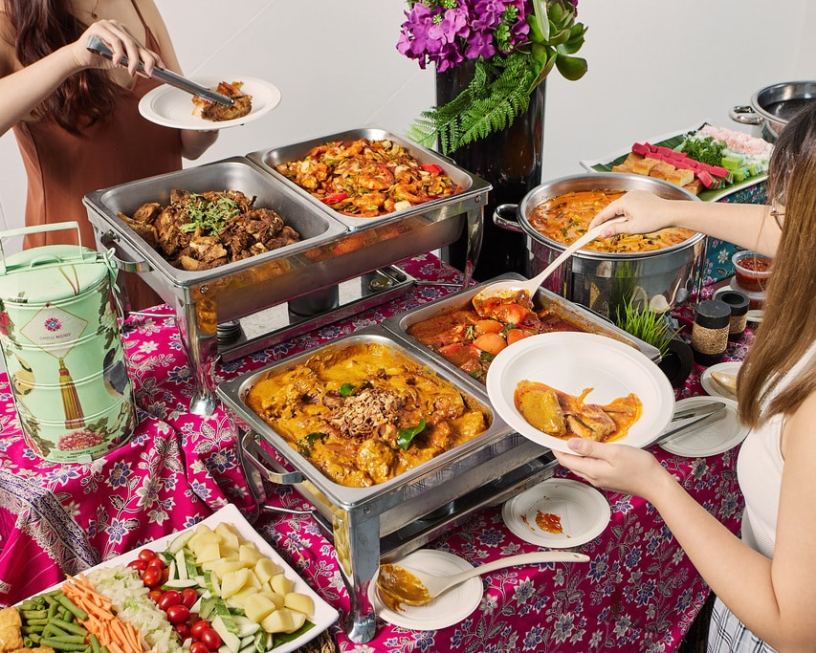
A halal certificate is usually read as a statement about a company, when it is actually a statement about a particular kitchen, for a particular period, under a particular scheme. Most misunderstandings start there. Knowing what the document covers and what it leaves out separates checking a supplier from accepting a logo, and it is the first thing worth establishing when comparing the best halal catering singapore currently has available.
The Certificate Covers Premises, Not Companies
Certification in Singapore is issued by Muis and attaches to specified premises rather than to a business name. A caterer running a central kitchen and two satellite outlets may hold certification for the central kitchen alone, which is fine if that is where your food is cooked and a problem if it is not. The certificate names the address it covers. Read it, then ask which kitchen your order will actually be prepared in and confirm that the two match before going any further.
Schemes Are Not Interchangeable
Muis operates several certification schemes covering different kinds of operation, and a restaurant certified for its dining room is not automatically certified for large-volume catering produced in the same building. Ask which scheme the caterer holds and whether it covers the production they will be doing for you. This matters most with operators who added catering to an existing food business, since the original certification was scoped to the original activity and may never have been extended to cover the rest.
Expiry Dates Apply to Your Event, Not to Today
Certificates run for a fixed term and have to be renewed rather than held indefinitely. The date that matters is the date of your event and not the date you happened to check, so a certificate expiring in six weeks is of limited use for a function three months out. Ask when renewal falls due and what happens if it lands close to your booking. Established operators renew well in advance and will say so without hesitation, which is itself informative.
Verification Does Not Depend on Trust
A logo on a website is not evidence. Logos get copied, and they stay up long after certification has lapsed. Ask for a copy of the certificate itself, which carries a reference number, the certified premises and the validity period, then check those details against the Muis listing rather than against the caterer own marketing material. This takes a few minutes and it is the only step in the whole process that returns a definite answer rather than an impression.
Halal-Friendly Is Not a Category
No pork no lard, Muslim-owned and halal ingredients are self-declared descriptions with no external verification behind them. They may well be accurate and they are still not certification, which matters for religious occasions and for any guest who has been told the food is certified. The same care applies across the rest of the guest list, and where vegan catering singapore provision is needed alongside certified dishes, sourcing both from one certified kitchen keeps the standard consistent rather than splitting it between suppliers.
The Chain Continues After the Kitchen
Certification covers handling, and handling does not stop when the food leaves the premises. Delivery vehicles, insulated carriers, chafing dishes, serving utensils and storage at the venue are all part of the chain, and food prepared correctly can still be compromised by equipment that has been used for something else. Ask what the caterer supplies and how it is kept separate. An operator with a certified kitchen and no answer on transport has solved only part of the problem.
On-Site Cooking Raises the Bar
Live stations, grills and anything finished at the venue move part of the preparation out of the certified kitchen and into a space that is not certified at all. That is workable, but it depends on the staff, the equipment they bring and the discipline they apply on site. Ask who will be cooking, what training they have had and what equipment travels with them. The answer should be specific about utensils and surfaces rather than general about standards.
Mixed Venues Need Deciding in Advance
Many venues serve non-halal food elsewhere on the premises or on the same evening. That does not prevent certified catering, but it does need arranging rather than assuming. Establish where your buffet line sits, whether any service areas are shared, how equipment is kept apart and what happens with guests moving between areas. Raise it with the venue and the caterer together rather than separately, since each tends to assume the other has dealt with it.
Labelling Is What Guests Actually See
Whatever has been verified in advance, guests judge the event by what is in front of them. Every dish should carry its name and its dietary status, each should have its own serving utensil, and staff should be briefed well enough to answer questions without guessing. Where guests are likely to ask, some hosts display the certificate at the service table. None of this is difficult and all of it is noticed when it is missing.
Putting the Checks in Order
Ask for the certificate first, before menus or prices, and check the premises and the expiry date against your event date. Confirm which kitchen is cooking, what equipment travels with the food and how anything finished on site will be handled. Get the answers in writing, since a verbal assurance is worth very little once something has gone wrong. Established best halal catering singapore providers treat these questions as routine and will answer all of them in a single conversation, and hesitation at this stage is worth taking seriously.

