
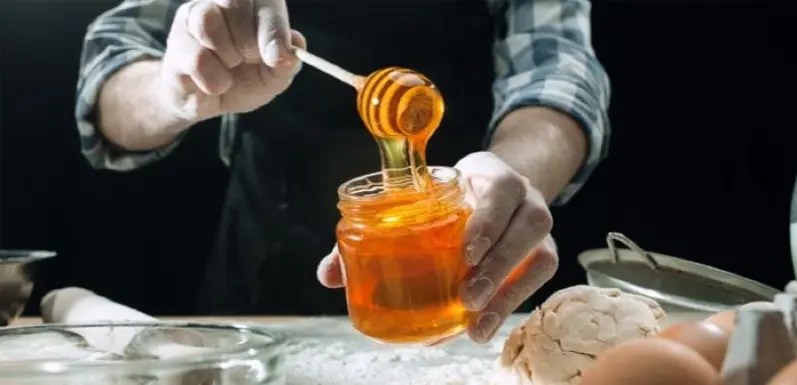
If you spend enough time inside serious bakeries—places where craft actually matters—you notice something quickly: the biggest breakthroughs rarely come from flashy techniques. They come from ingredient decisions. Quiet ones. Strategic ones. Change the ingredient, and suddenly the entire personality of a pastry shifts.
Honey is one of those decisions.
Not the generic squeeze-bottle kind. Real honey. Raw, varietal, sourced with intention. When bakers start working with it seriously, something interesting happens: their cakes stop tasting like “dessert” and start tasting like place, craft, and identity.
1. Raw Honey Is Not Just Sweet — It’s a Functional Ingredient
When it comes to food creativity, refined sugar is simple, predictable, and industrial.
Honey isn’t; Raw honey is a biological, climate-responsive ecosystem. When pastry scientists talk about honey, they rarely describe it as a sweetener. They describe it as a biochemical system.
Inside raw honey you’ll find:
- Fructose and glucose (different behaviors than sucrose)
- Organic acids
- Enzymes produced by bees
- Trace minerals
- Pollen particles
All of these influence how baked goods behave. By choosing authentic raw Honey For Sale from trusted sources, culinary professionals can leverage these natural properties to create more distinctive and optimized recipes—where sweetness is not just added, but engineered to enhance texture, aroma, and overall culinary performance.
For a professional or home baker, this means honey quietly solves problems at multiple levels:
- Moisture management – honey holds water naturally
- Flavor transport – spices, citrus, and nuts bloom more vividly
- Fermentation support – natural sugars help yeast perform
- Crumb stability – batters emulsify more smoothly
Food scientists studying cereal chemistry often point out that honey slows starch retrogradation—the process responsible for cakes going stale.
Translated into bakery language?
Your product stays soft longer: And if you’re running a bakery, café, or dessert brand, that matters more than people admit.
Because longer freshness means:
- Less waste
- Fewer preservatives
- Better customer experience
Sometimes the smartest innovation isn’t new machinery, it’s choosing a smarter ingredient.
2. Moisture Is Money: The Hidden Economics of Honey
Let’s put this bluntly for bakery investors or operators.
Dry pastries lose customers.
Honey prevents that.
Honey is hygroscopic, which means it actively attracts and retains moisture from the surrounding environment. In practice, this changes the life cycle of baked products dramatically.
You’ll notice it immediately in:
- Sponge cakes
- Muffins
- Soft cookies
- Brioche-style pastries
A sugar-based cake may begin drying within 24 hours.
A honey-based version? It can hold softness noticeably longer. That has real operational implications:
- Longer retail display life: Products still look appealing in the afternoon—not just in the morning rush.
- Reduced product waste: Less unsold inventory thrown away at closing time.
- Cleaner ingredient lists: No need for artificial humectants or shelf stabilizers.
Many boutique bakeries now deliberately source packed raw farm honey because it preserves these properties. That is because, when honey is overheated or heavily filtered, a lot of its natural structure disappears.
But raw honey—handled carefully—keeps its full moisture-binding ability. And that makes it both a technical solution and a branding advantage.
3. Honey Carries Landscape: The Power of Flavor Terroir
One of the most exciting shifts in modern pastry isn’t technique, it’s ingredient storytelling. Think about coffee. Or wine. Or chocolate. People care where things come from. Honey is one of the most expressive ingredients in this regard because bees literally collect flavor from landscapes. Different flowers produce completely different honey personalities.
Pastry chefs work with this intentionally.
Examples include:
- Clover honey: Light, delicate, almost vanilla-like — perfect for sponge cakes.
- Wildflower honey: Complex and layered — ideal for rustic pastries and nut-based desserts.
- Sunflower honey: Deep, earthy tones with strong color.
- Orange blossom honey: Bright citrus aroma — incredible with Mediterranean pastries.
Once bakeries understand this, menus start changing.
Instead of generic labels like “honey cake,” you start seeing things like:
- Wildflower Honey Almond Cake
- Orange Blossom Madeleines
- Sunflower Honey Brioche
Suddenly the pastry feels intentional and crafted. While customers may not analyze the chemistry, but they recognize authenticity when they taste it. And authenticity builds loyalty faster than marketing campaigns ever will.
4. Honey Changes How Pastries Brown, Smell, and Taste
Now let’s talk about what happens in the oven. Two critical flavor-building processes occur when baking:
- Maillard reaction
- Caramelization
These reactions create toasted aromas, rich crusts, and depth of flavor. Honey accelerates both processes because fructose caramelizes faster than sucrose.
The result? Pastries baked with honey often develop:
- deeper golden crusts
- richer aromatic complexity
- layered sweetness rather than flat sugariness
But working with honey requires technical respect. Professional pastry teams usually follow a few simple adjustments:
- Replace up to 50% of sugar first when adapting recipes
- Reduce liquids by 15–20% (because honey contains water)
- Lower oven temperatures slightly
When done correctly, the texture improves noticeably:
- Finer crumb
- Softer interior
- Fuller aroma
This is why honey quietly appears in many artisan bread and pastry programs—even when it’s not advertised. The chefs know what it does.
5. Smart Bakeries Treat Honey as a Strategic Ingredient
Today’s food industry isn’t just about flavor; it’s about credibility.
Consumers leverage a sourcing integrity framework that incorporates:
- Where ingredients come from
- How they were produced
- Whether ecosystems were respected
That’s why many bakeries now partner directly with honey farms producing:
- Raw honey
- Minimally filtered honey
- Varietal floral honey
- Sustainably harvested honey
These relationships allow bakeries to build deeper product stories.
Imagine customers coming to realization that your pastries are made with honey that:
- Comes directly from regional hives
- Retains natural enzymes and pollen
- Has never been overheated or industrially processed
Suddenly the ingredient becomes part of the brand identity.
It signals:
- Environmental responsibility
- Transparency in sourcing
- Respect for craft agriculture
And in a competitive food market, those signals matter because people increasingly support businesses that feel real.
In essence, honey doesn’t transform bakeries overnight. But used thoughtfully, it shifts the entire trajectory of a product line. Texture improves. Flavor deepens. Stories become authentic. And customers notice. For bakers conscious about modern craft, honey isn’t just an ingredient—it’s a quiet strategic advantage hiding in plain sight.
 Food Recipes Ideas